Lag Ruins Player Experience
“Players experience lag spikes during crucial moments, leading to negative reviews and player churn, but we can't identify if it's server-side or client-side.”
Multiplayer lag, server crashes, and post-update bugs drive players away. Monitor game server performance, track matchmaking latency, and catch performance regressions before they trend on social media and kill your player count.
Real problems experienced by teams like yours every day
“Players experience lag spikes during crucial moments, leading to negative reviews and player churn, but we can't identify if it's server-side or client-side.”
“Players wait too long to join games due to slow matchmaking APIs, causing frustration and abandonment.”
“Game servers crash or slow down during peak hours without warning, disrupting thousands of active sessions.”
“Player progress, inventory, or in-game purchases occasionally fail to save due to database issues we can't trace.”

Measurable improvements across your DevOps workflows and business metrics
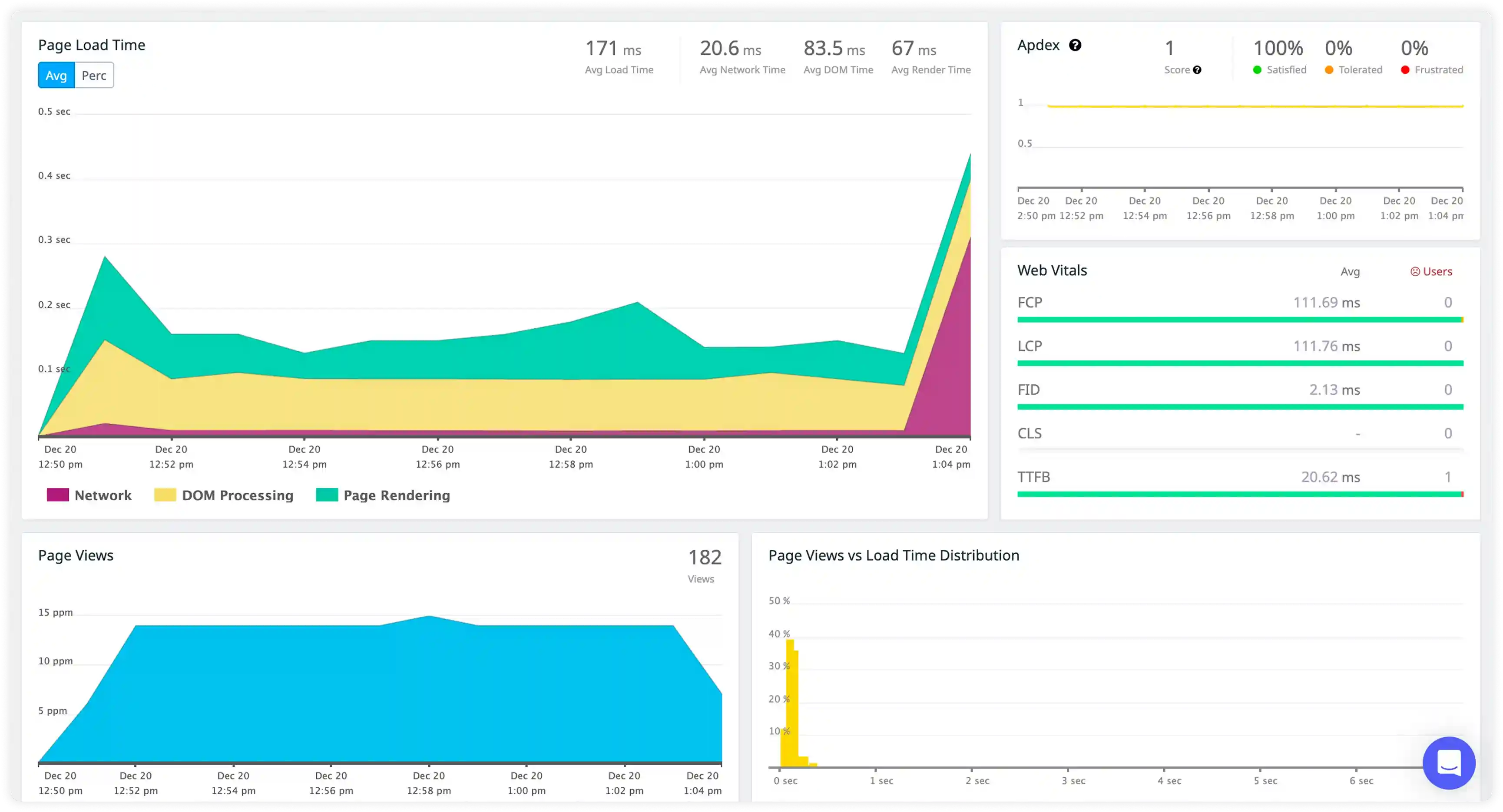
Monitor frame rates, rendering performance, and server tick rates in real-time to identify and fix lag sources.
Track matchmaking API performance, queue lengths, and algorithm efficiency to optimize player pairing.
Monitor server health metrics (CPU, memory, network) with machine learning-based alerts for anomalies.
Atatus adapts to how engineering teams work across development, operations, and reliability.
Debug errors and slow paths with the full context of what happened.
Atatus for developersTrack deployments and see how each release affects stability.
Atatus for DevOpsWatch latency and error rates to ship with less production risk.
Atatus for release engineers"Solid Product even better support." The integration path is incredibly simple/easy and the overall interface is very intuitive. That said, I had a handful of odd use cases that the support team was incredibly responsive in helping me work through.
Pricing, deployment, data and the agent. If something is missing, a person will answer it on a demo call.
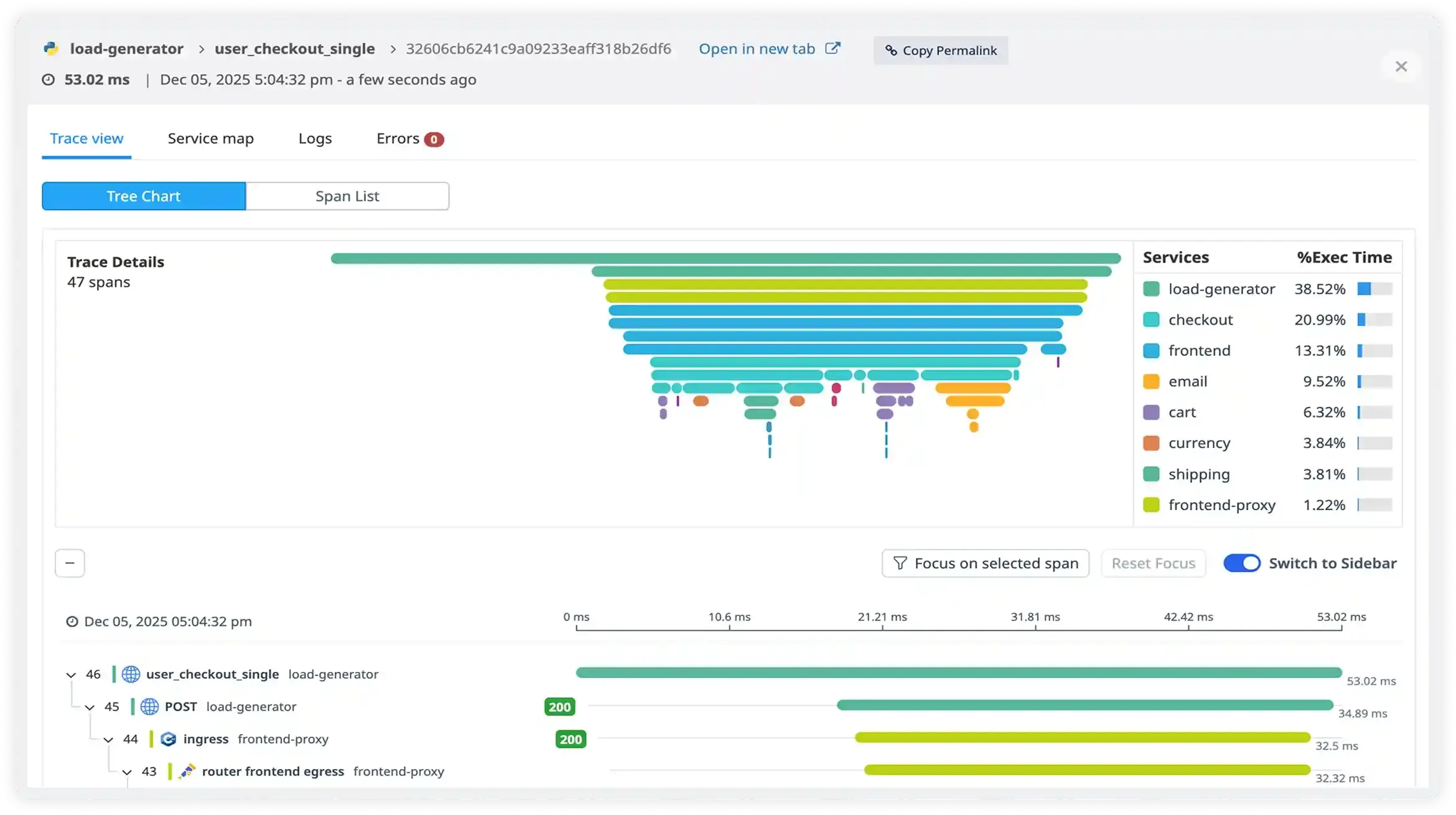
Lag during multiplayer matches often comes from slow backend API calls, inefficient database queries loading player data, or overloaded game servers. Atatus shows you exactly which services are slowing down your game loop with distributed tracing.
Track every request from player input to server response. See if lag is caused by authentication delays (checking player credentials), matchmaking queries taking too long, or third-party services like chat or leaderboards timing out. Fix the bottlenecks that frustrate players most.
Server crashes during peak hours happen when CPU, memory, or database connections hit limits. Atatus monitors resource usage in real-time and alerts you before servers crash.
Set up alerts when CPU usage exceeds 80% or memory reaches critical levels. See which game instances or matchmaking queues are consuming the most resources. Auto-scale your servers based on player count to handle traffic spikes during tournaments or new releases.
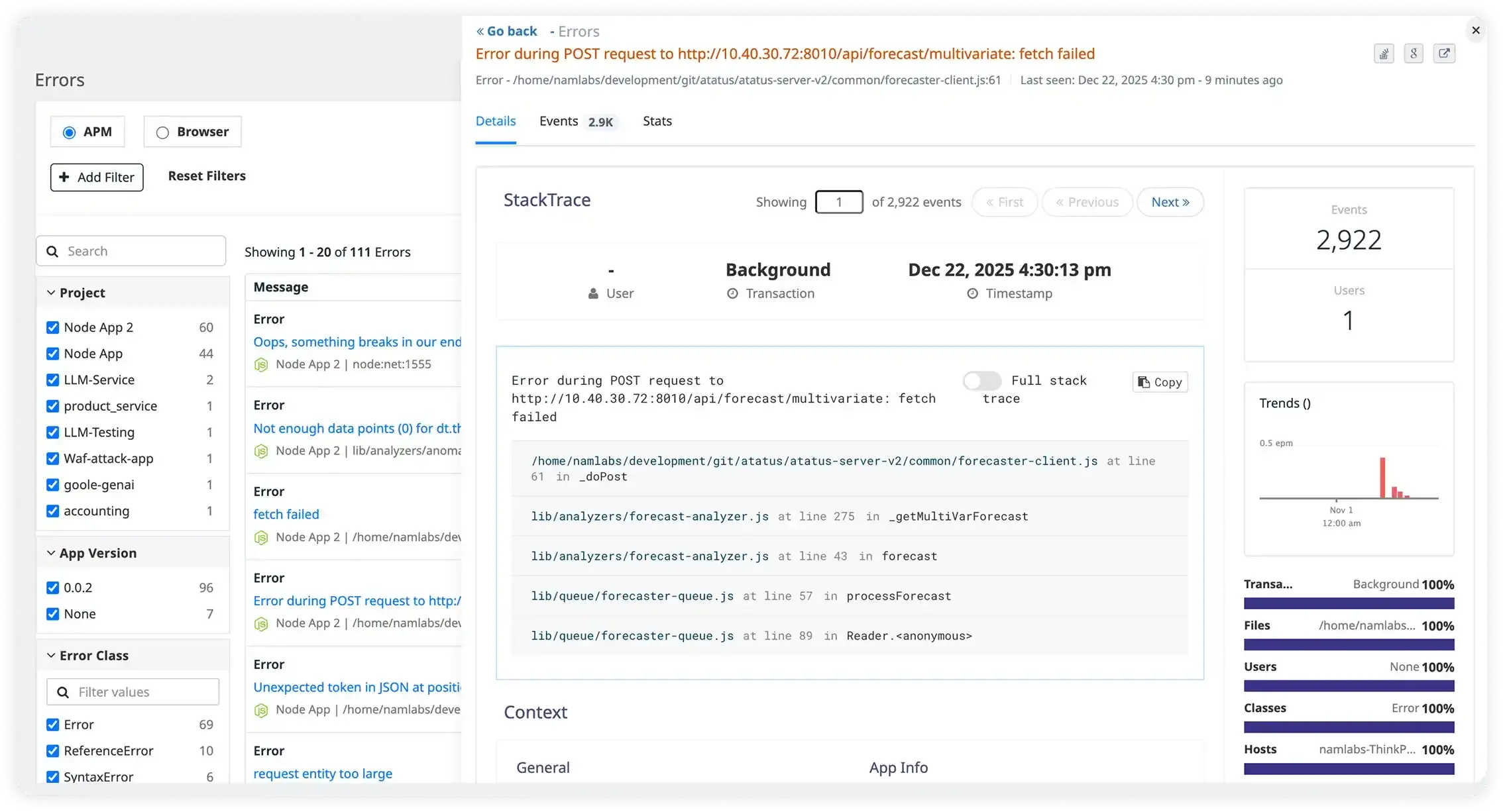
Player churn after updates usually stems from new bugs, performance regressions, or broken features. Atatus's error tracking shows you every crash, exception, and failed transaction introduced by your update.
Compare error rates before and after deployment. Track which new features are causing crashes. See if specific devices or platforms are affected more than others. Roll back problematic changes before losing more players.
Yes, Atatus's distributed tracing visualizes the entire matchmaking flow. See how long it takes to find matches, check player rankings, verify regional servers, and create game sessions.
Identify if slow matchmaking is caused by ranking algorithm queries, cross-region database calls, or third-party skill rating services. Optimize the slowest steps to get players into matches faster.
Atatus's Real User Monitoring (RUM) tracks actual player experience, not just server metrics. See page load times for game lobbies, in-game store performance, and client-side frame rates.
Monitor custom events like match completion rates, in-game purchases, and level progression. Get alerts when player-facing metrics degrade. Understand how performance impacts engagement and retention.
Performance degradation over time often comes from memory leaks, database bloat, or inefficient code accumulating data. Atatus tracks memory usage trends and identifies services with increasing resource consumption.
See if your game servers are leaking memory with each match, if database tables need indexing as player data grows, or if log files are filling up disk space. Historical metrics help you spot trends before they become critical issues.
No, Atatus is designed for game developers, not just DevOps teams. Our dashboards show game-specific metrics like active players, match latency, and server health in an intuitive interface.
Set up monitoring in minutes with our SDKs for Unity, Unreal Engine, and popular game server frameworks. Pre-built dashboards for gaming give you immediate visibility. When issues occur, clear alerts tell you exactly what's wrong and how to fix it.
Start free and send your first trace with OpenTelemetry or the Atatus agents. APM, logs, RUM, infrastructure and SIEM, all on one timeline.