- Cloud
Cloud Monitoring: A Complete Guide
Cloud Monitoring is the process of tracking, reviewing and managing the health and security of cloud-based systems. What are the best tools to monitor your Cloud environment?
- opentelemetry
OpenTelemetry vs Fluent Bit - Key Differences
Compare OpenTelemetry and Fluent Bit, understand their strengths, and learn how to use them together for efficient log and metric collection in observability.
- RUM
Real User Monitoring (RUM) vs. Synthetic Monitoring: Understanding Best Practices
Dive into real user and synthetic monitoring to understand their use cases, benefits, and limitations. Find out how Atatus combines both for complete performance visibility.
- Real User Monitoring
9 Best Real User Monitoring Tools and How to Choose One for Your Business
Real User Monitoring is a technique for detecting performance problems and determining their causes in real-time. We look at what elements to look for in a real user monitoring tool to provide a great user experience.
- Logs
Fluentd vs Fluent Bit: A Side-by-Side Comparison
Compare Fluentd and Fluent Bit to explore key differences, top use cases, and how to choose the right log collector for your observability stack.
- DATADOG
Datadog vs Prometheus | A Comparison
As a cloud-based SaaS solution, Datadog requires no infrastructure installation or maintenance. Since Prometheus is open-source, it must be downloaded manually.
- Real User Monitoring
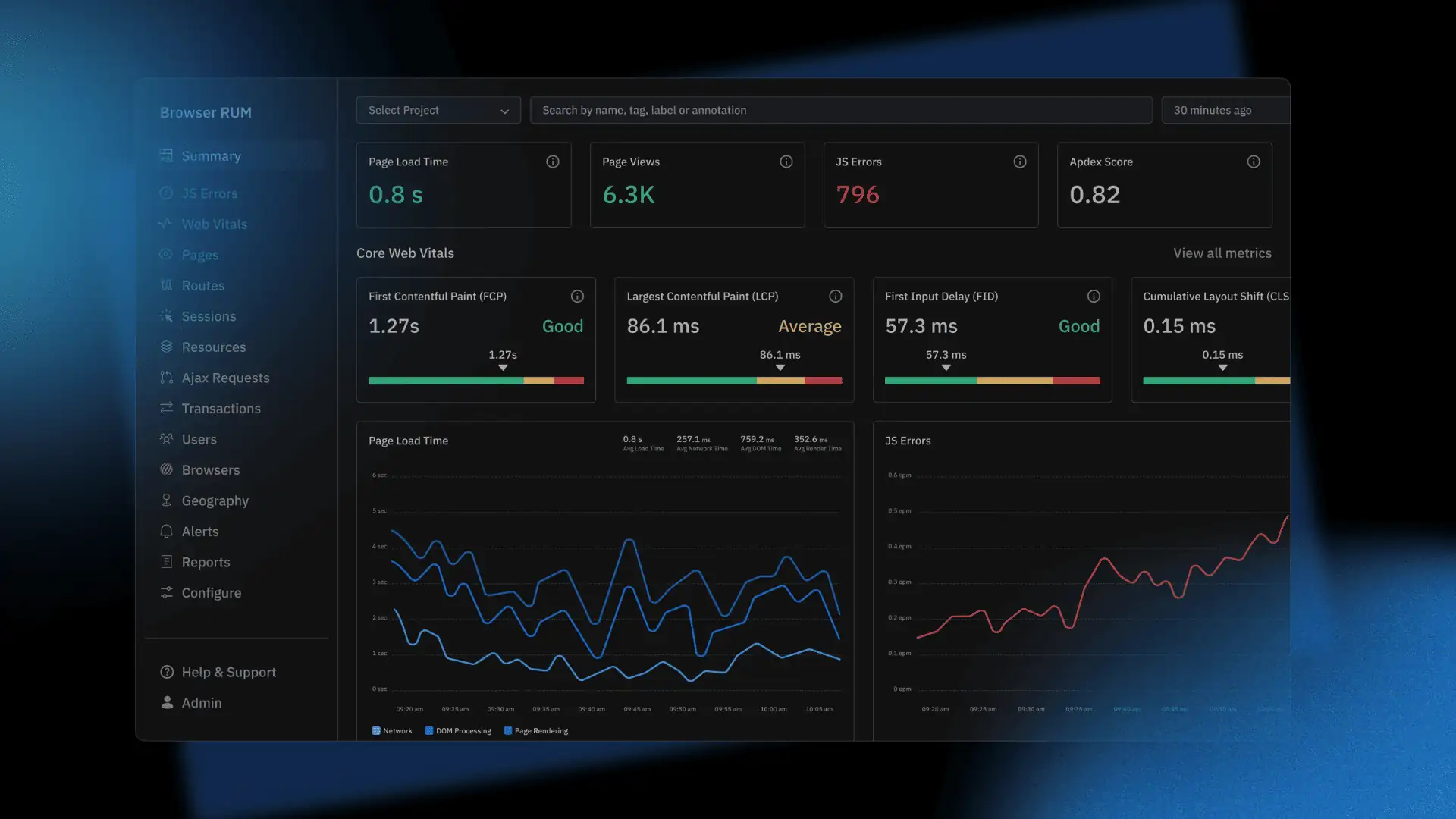
What is Real User Monitoring (RUM)?
Real User Monitoring (RUM) is the process of collecting data on how actual users interact with your website or application across regions, devices, and network conditions.
- Logs
Apache Error Log Explained in Detail
Apache error logs will provide you with useful information about the traffic to your application, errors that occur, and performance. This article will cover Apache web server logs, including log levels, format, and formatting as JSON.
- Node.Js
Node.js Performance Testing and Tuning: Step by Step Approach
Node.js can be used for a variety of tasks, including scripting to do tasks, running a web server, and serving static files, such as a website. Today, we'll go over the procedures to test a Node.js HTTP web API.